
Consignor vs Consignee in Indian Freight: Roles, Responsibilities & E-Way Bill Obligations
Key Highlights
- The consignor acts as the initiator/sender of goods, while the consignee is the legal recipient.
- An e-way bill is mandatory for any consignment valued over ₹50,000.
- India's logistics costs are officially estimated at 7.8% to 8.9% of GDP.
- Non-compliance with e-way bill rules attracts a penalty of ₹10,000 or the tax amount.
Who Are the Consignor and Consignee in Indian Transport?
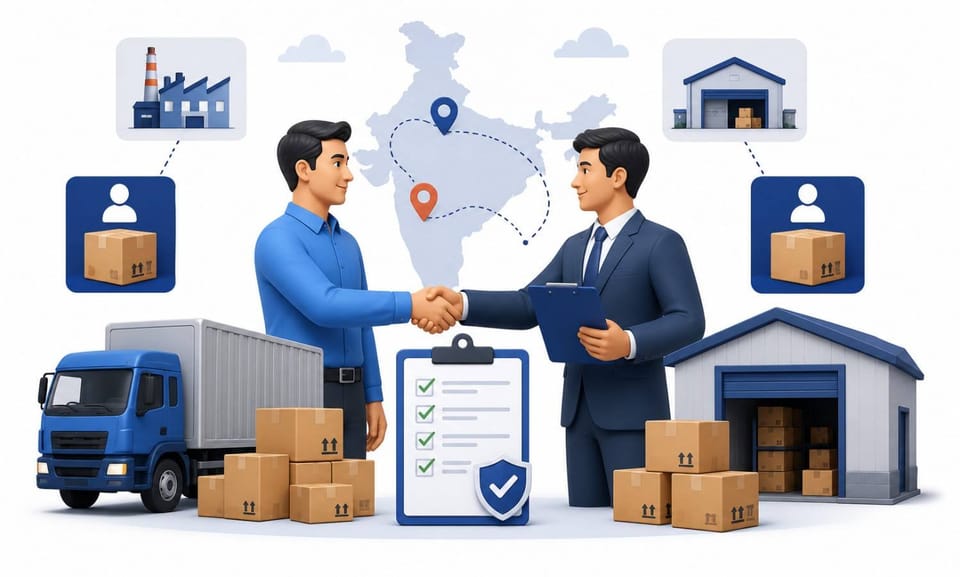
In the world of logistics and supply chain management, the terms consignor and consignee represent the two structural pillars of any shipment. The consignor is the person or entity that sends the goods, often acting as the seller or the supplier in a commercial transaction.
Conversely, the consignee is the party to whom the goods are being delivered, typically the buyer or a designated agent. While these roles might seem like simple labels, they carry distinct legal and tax obligations under the Indian Goods and Services Tax (GST) framework.
The relationship between these two parties is governed by the contract of carriage. The consignor enters into this contract with a transporter to move goods from point A to point B. The consignee, while not always the one paying for the freight, holds the legal right to take possession of the goods upon arrival at the destination.
In simple terms, the consignor is the sender who hands over the cargo, and the consignee is the receiver who signs for it.
What Is the Difference Between Consignor and Consignee?
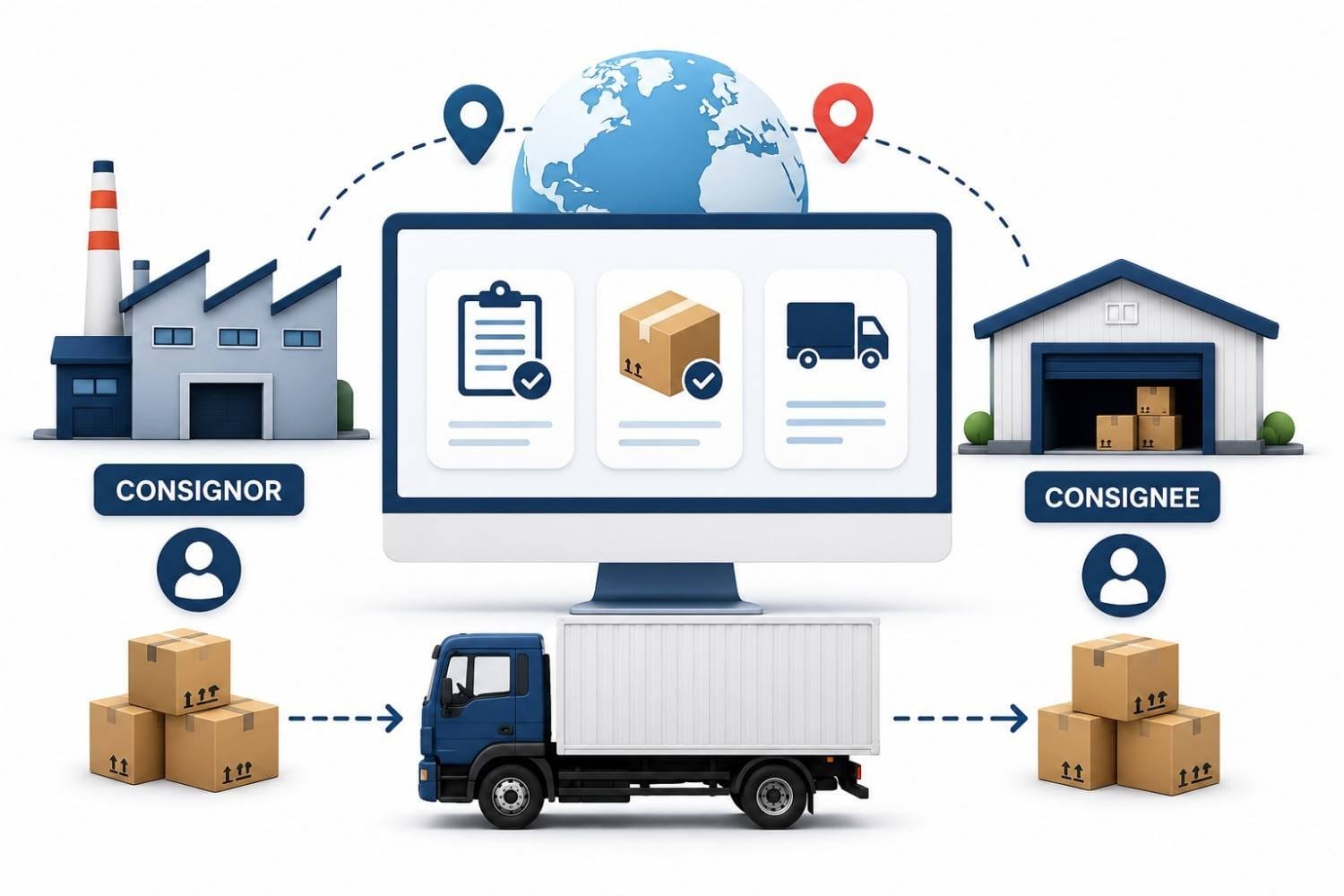
The difference between a consignor and a consignee goes beyond who sends and who receives; it is about the transfer of risk and the point of legal accountability. In a standard sales transaction (F.O.R. or Freight on Road), the consignor is responsible for ensuring the goods are packed, invoiced, and documented correctly before they leave the warehouse.
The consignee’s responsibility begins at the gate of the destination, where they must verify the quantity and condition of the goods against the invoice.
Why Are E-Way Bill Responsibilities Split Between These Parties?
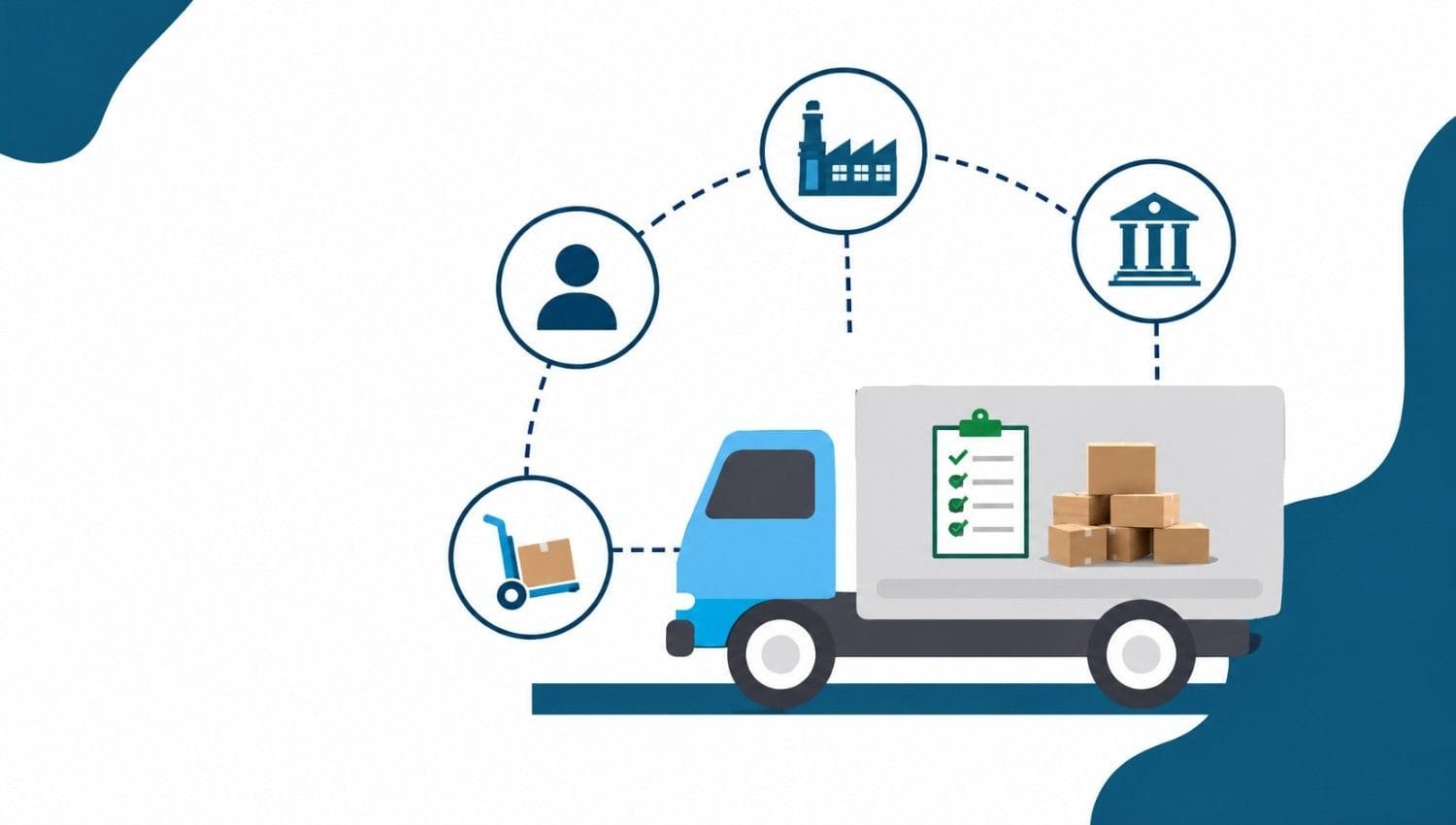
Under the Indian GST regime, the responsibility for e-way bill generation depends on who causes the movement of the goods. According to Rule 138 of the CGST Rules, if a registered person (the consignor) causes the movement, they must generate the e-way bill. However, if the consignor is unregistered and the consignee is registered, the responsibility shifts entirely to the consignee.
This split responsibility exists to ensure that the government can track the movement of goods in real-time, regardless of the tax status of the individual parties. If both the consignor and consignee fail to generate the document, the responsibility shifts to the transporter for all consignments exceeding the ₹50,000 threshold.
The Bill-To Ship-To Complexity
A common point of confusion for manufacturers is the bill-to-ship-to scenario. Here, the consignor (Supplier A) bills a buyer (Company B), but the goods are shipped directly to a third party (Consignee C). In this case, the e-way bill must capture the GSTIN of both the buyer and the final delivery location. If the Ship-To address is in a different state than the Bill-To address, the tax types (IGST vs. CGST/SGST) may change, making the accuracy of consignor and consignee data critical for audit safety.
How Can Automation Solve Consignor-Consignee Coordination Gaps?
Manual coordination between the consignor, the transporter, and the consignee is the leading cause of transit friction. When a truck is delayed at a check-post due to an expired e-way bill, the consignor blames the transporter, and the consignee faces a stock-out. A freight operating system or a logistics operating system like RoaDo solves this by removing the human element from compliance.
By utilizing VAHAN integration, platforms can automatically verify that the vehicle number entered in Part B matches the transporter’s registered fleet. Furthermore, because RoaDo uses hardware-free, SIM-based tracking, the consignor can monitor the e-way bill’s validity in real-time. If a truck is stuck in traffic and the bill is set to expire, the system triggers an AI-powered exception alert, allowing the team to extend the validity before a penalty is incurred.
This proactive management has helped manufacturers achieve a 65% shorter billing cycle by automating reconciliation between dispatch data and final receipts.
What Are the Financial Risks of Documentation Errors?
The financial stakes of mismanaging the consignor-consignee relationship are high. India’s logistics cost is a significant economic factor, officially estimated between 7.8% and 8.9% of GDP. A large portion of this cost is waste penalties, detentions, and administrative overhead caused by documentation errors.
Under Section 122 of the CGST Act, transporting goods without a valid e-way bill can lead to a penalty of ₹10,000 or the tax amount sought to be evaded, whichever is higher. Moreover, the vehicle and goods can be detained for weeks, leading to high demurrage charges.
An e-way bill consists of Part A (shipment details like GSTIN and value) and Part B (transporter details like vehicle number). The document is legally incomplete and invalid for transport until Part B is updated with a valid vehicle number.
For businesses seeking freight cost reduction, the focus must shift to zero-defect compliance. By adopting a modular, zero-CAPEX platform, consignors can ensure that every trip is tracked from order to delivery. This visibility reduces the DSO (Days Sales Outstanding) by 7–10 days because the consignee’s digital Proof of Delivery (ePOD) is instantly reconciled with the consignor's invoice.
Conclusion
Navigating the roles of the consignor and consignee is a fundamental requirement for anyone operating in the Indian logistics landscape. While the definitions are straightforward, the compliance obligations regarding e-way bills and GST documentation require meticulous coordination between the sender, the receiver, and the transporter.
By moving away from manual, fragmented processes and adopting a unified freight operating system, businesses can turn compliance from a hurdle into a competitive advantage. The future of Indian logistics lies in this digital integration, where data transparency ensures that goods move across borders without the threat of penalties or delays.
Platforms like RoaDo are built for exactly this complexity, enabling manufacturers to scale their operations with total visibility and automated compliance.
Frequently Asked Questions
- What is the meaning of consignor and consignee?
The consignor is the party dispatching the goods, and the consignee is the party receiving them at the final destination. - Who is responsible for e-way bill generation?
The registered person causing the movement of goods (usually the consignor) is responsible for generating it. - Can a consignee generate an e-way bill?
Yes, if the consignor has not generated it or if the consignor is an unregistered person. - Is an e-way bill required for values below ₹50,000?
Generally, no, but it is mandatory regardless of value for the interstate movement of handicraft goods or job work. - What is the "Bill-To Ship-To" model?
It is a transaction where the party receiving the invoice is different from the party receiving the physical goods. - How long is a road e-way bill valid?
It is valid for one day for every 200 km of distance, or part thereof, for regular cargo. - What happens if the transporter changes the vehicle?
The transporter or the generator must update the new vehicle number in Part B of the e-way bill before the movement starts. - What is the penalty for moving goods without an e-way bill?
The penalty is ₹10,000 or the amount of tax involved, plus potential detention of the vehicle.
Simplify consignor-consignee coordination with RoaDo’s AI-powered freight operating system. Automate e-way bill compliance, track shipments in real time, and prevent costly delays and penalties across your logistics network.