
Vehicle Tracking Without Hardware: How SIM-Based Tracking Compares to GPS Devices

Key Highlights
- SIM-based tracking eliminates hardware, cutting carrier onboarding time from weeks to minutes.
- India’s supply chain visibility market is growing at 16.3% annually.
- AIS-140-certified GPS hardware requires a hard-wired panic button and dual data transmission to government endpoints, a regulatory bar that SIM-based visibility platforms don't need to clear for operational tracking.
- RoaDo has tracked 1.2M+ trips hardware-free, reducing freight costs by 5–10% for customers.
Buy a vehicle tracking system today, and the first decision isn't which brand; it's whether the truck needs a physical device at all. That question didn't used to have a real answer. Now it does, and getting it wrong means either overpaying for hardware a mixed fleet doesn't need or under-delivering on the shipment visibility a modern logistics operation actually requires.
What a Vehicle Tracking System Needs to Deliver for Shipment Visibility
A vehicle tracking system exists to answer one operational question reliably: where is this shipment right now, and will it arrive when promised? Everything else- dashboards, alerts, and reporting- is built on top of that core function working consistently.
Shipment visibility breaks down the moment tracking data goes stale or a vehicle drops off the map entirely. For a manufacturer running freight through dozens of third-party carriers rather than one owned fleet, the real test isn't whether the system works on paper; it's whether it can be deployed across every carrier fast enough to actually deliver that visibility at scale.
GPS Tracking System for Vehicles: The Hardware-Based Approach

A traditional GPS tracking system for vehicles relies on a physical device, wired into the truck, transmitting location through its own hardware. This gives continuous positioning independent of the driver's phone, and it's the only path to AIS-140 certification for vehicles where that's legally required.
That certification carries real weight for passenger and public transport vehicles specifically. AIS-140 devices need a hard-wired panic button, tamper-resistant casing, and dual data transmission to both the transport authority and emergency response systems, backed by a minimum four-hour independent battery.
None of that is optional once a vehicle falls under the mandate, but for goods carriers where AIS-140 isn't legally required, that same hardware becomes a cost and installation burden without a matching regulatory upside.
SIM-Based Tracking: How a Vehicle Tracking System Works Without a Device
SIM-based tracking replaces the physical device with the mobile network connectivity already available through a driver's phone or a lightweight SIM module, sending location data the same way a text message travels. No wiring, no installation appointment, no hardware to maintain.
The GPS positioning itself doesn't change; satellites calculate location the same way regardless of which method transmits that data onward. What changes is how fast a vehicle tracking system can come online: a SIM-based approach can start tracking a new carrier within minutes, while hardware installation across a large third-party fleet can take weeks to complete carrier by carrier.
This speed advantage is exactly why hardware-free platforms have gained ground for shippers coordinating hundreds of small transporters, where getting every truck instrumented with physical devices was never realistic in the first place.
How Do SIM-Based and GPS Tracking Systems Compare on Cost and Setup?
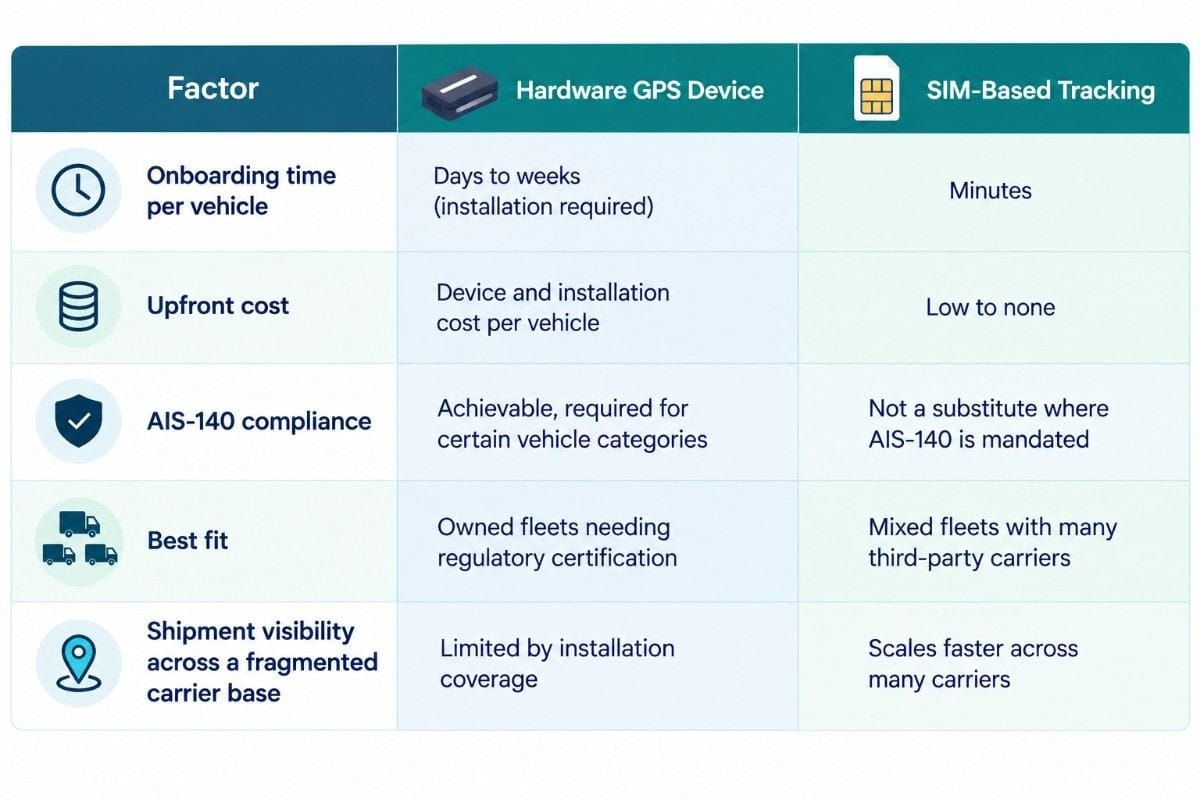
Neither column is universally better; a business running an owned, regulated fleet has different needs than one coordinating a fragmented third-party network, and the right vehicle tracking system depends entirely on which situation actually applies.
Why On-Time Delivery Depends on More Than Just Location Data
On-time delivery isn't guaranteed just because a vehicle tracking system shows a location pin updating regularly. A dot on a map only becomes useful when it's paired with an accurate prediction of arrival and an early warning when something's about to go wrong.
On-time delivery depends on a separate layer entirely: exception handling, meaning the system flags an unplanned stop or route deviation while there's still time to act, rather than after a delivery window has already closed. A tracking system without that layer is showing history, not preventing a miss.
This is where a lot of basic tracking setups fall short even when the underlying GPS data is perfectly accurate; knowing a truck’s coordinates doesn't help if the system lacks automated exception management to flag deviations from the planned SLA.
Which Vehicle Tracking System Is Best for Managing a Mixed Fleet?
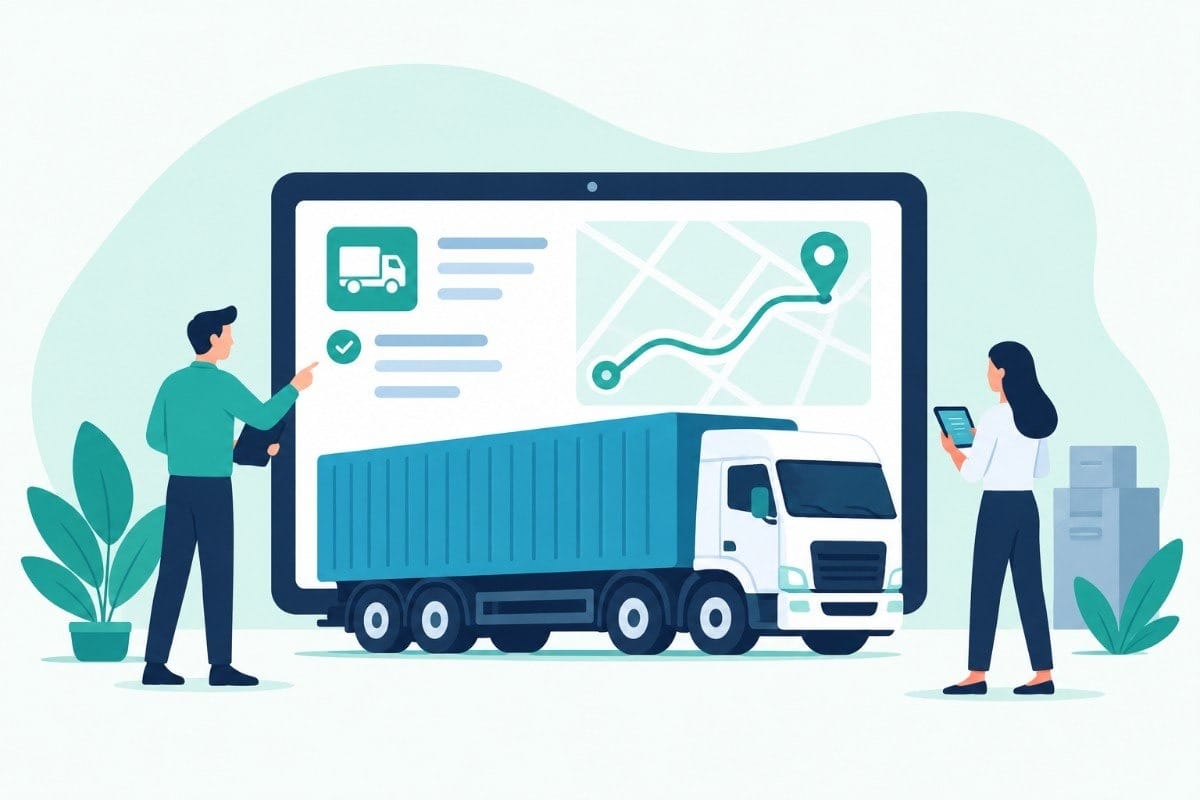
A logistics visibility platform earns its place over a standalone vehicle tracking system when it connects location data to the rest of the shipment lifecycle, exception alerts, compliance status, and delivery confirmation, rather than showing a map in isolation. For a manufacturer running freight through a genuinely mixed fleet, that connective layer matters more than raw tracking accuracy on its own.
As a comprehensive Freight Operating System (FOS), RoaDo moves beyond standalone tracking by applying SIM-based visibility across its carrier network and layers AI-based exception alerts on top, flagging delays before they turn into missed delivery windows; the platform has helped avoid over 1 lakh such delays for its customers.
For shippers evaluating a shipment visibility platform specifically for a fragmented, third-party-heavy fleet, that combination of fast onboarding and proactive exception handling tends to matter more than which brand's GPS hardware looks best on a spec sheet.
Conclusion
Choosing a vehicle tracking system today comes down to matching the method to the fleet, not picking whichever option sounds more advanced. Hardware GPS still has a clear role for regulated, owned fleets needing AIS-140 certification, while SIM-based tracking wins on speed and reach for shippers coordinating a large, fragmented network of third-party carriers. Either way, location data alone doesn't deliver on-time performance; that depends on a visibility layer built to flag problems before they become missed windows. Businesses evaluating a shipment visibility platform should weigh onboarding speed and exception handling as heavily as raw tracking accuracy, since those are the factors that actually separate a working system from one that just shows a map. As India's logistics sector keeps digitizing at pace, that combination is quickly becoming the baseline expectation rather than a differentiator.
Frequently Asked Questions
1. What is the difference between a vehicle tracking system and SIM-based tracking?
A vehicle tracking system is the general category; SIM-based tracking is one method of powering it, using mobile network connectivity instead of a dedicated GPS device.
2. Is AIS-140 required for all vehicle tracking systems in India?
No, AIS-140 is mandatory for passenger and public transport vehicles specifically, not for all commercial vehicle tracking generally.
3. Does SIM-based tracking work without internet connectivity?
It depends on cellular network coverage; in areas with no signal, location updates queue and transmit once connectivity returns.
4. Can a shipment visibility platform work across vehicles from different transporters?
Yes, platforms built on SIM-based tracking can onboard third-party carriers quickly without requiring each one to install hardware.
5. What makes a logistics visibility platform different from basic GPS tracking?
A visibility platform connects location data to exception alerts, compliance status, and delivery confirmation, rather than showing location alone.
6. Why does on-time delivery need more than accurate location tracking?
Because knowing a vehicle's location doesn't prevent a delay; that requires exception alerts flagging problems early enough to act.
7. Is hardware GPS more accurate than SIM-based tracking?
Positioning accuracy is generally the same, since both rely on the same satellite signals; the difference is in transmission method, not location precision.
8. Which vehicle tracking system approach is better for a mixed fleet? SIM-based tracking generally onboards a mixed, third-party-heavy fleet faster, while hardware GPS remains necessary for AIS-140-regulated vehicle categories.
“Track shipments without hardware and gain real-time visibility across your carrier network. Discover how RoaDo helps flag delays early and keep deliveries on schedule.”