
Yard and Dock Management: A Complete Guide to Dock Scheduling and Trailer Visibility

Key Highlights
- Facilities without integrated dock and yard visibility average 6 hours of trailer dwell time, and 83% face daily scheduling conflicts.
- Yard management systems cut trailer check-in/check-out times by 15–30% and detention fees by 20-40%.
- Drivers experience detention at roughly 39% of stops.
- Detention cost the U.S. for-hire trucking industry $15.1 billion in 2023.
Dock management is the coordination of appointments, dock door assignments, and loading activity at a facility. Yard management goes a step further, tracking every trailer sitting in the yard before and after it reaches a dock. People mix the two up constantly, and it's easy to see why. A facility can run dock scheduling well and still lose hours to trailers nobody can find in the yard. Getting both right is what actually keeps detention charges and missed windows from piling up, and the gap between the two is usually where the real cost hides.
Most operations discover this the hard way, after a few months of watching detention invoices creep up without an obvious cause. The appointments look fine on paper. The dock team isn't obviously understaffed. What's usually missing is a shared, current picture of where every trailer actually is and whether the truck a warehouse team is expecting has even left its origin yet.
What Do Dock Management and Yard Management Actually Cover?
Dock management decides when a trailer gets a door and how that appointment gets booked. Yard management tracks where a trailer physically sits once it's on-site, staged, parked, or waiting on a dock assignment.
Warehouse management is a separate system again, handling what happens once goods are inside the building: picking, packing, and inventory. Facilities that don't connect these functions pay for it, often without realizing exactly where the cost is coming from. 83% report daily scheduling conflicts, and the average trailer dwell time runs about 6 hours per visit.
Why Does Dock and Yard Coordination Break Down Without Visibility?
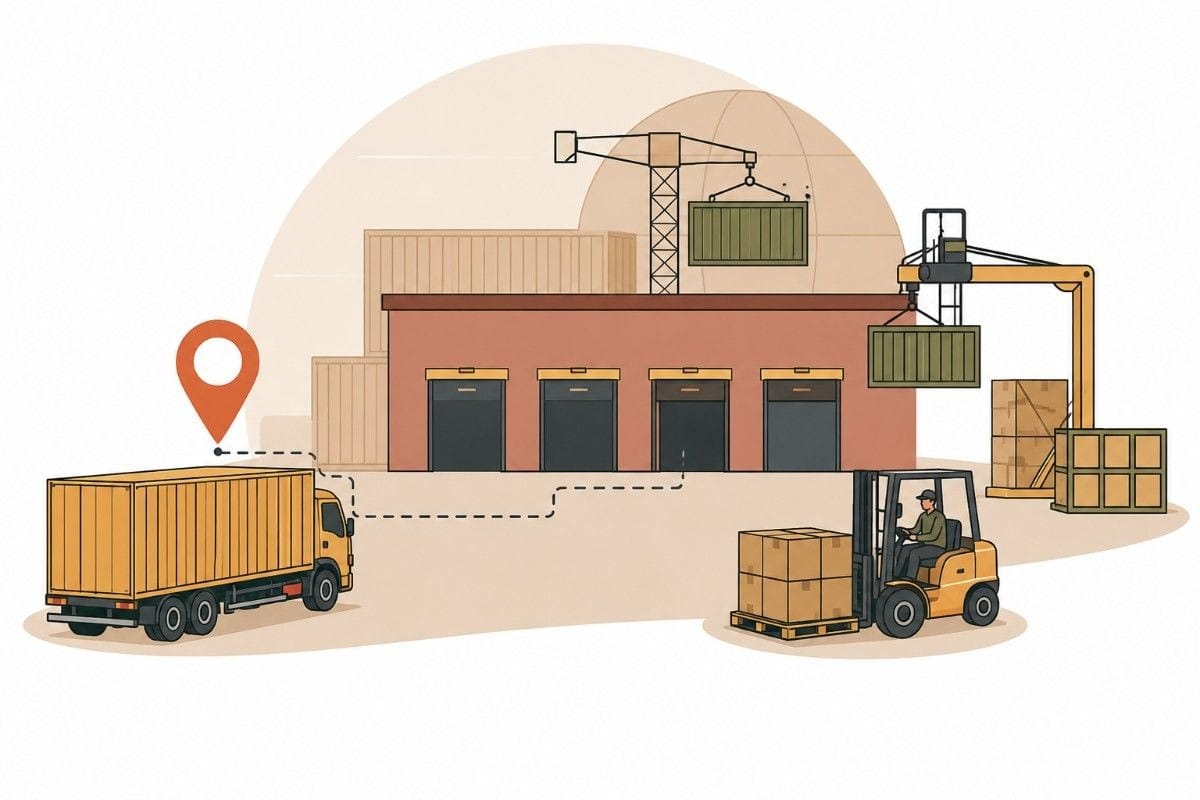
Coordination fails when transportation, dock, and yard teams work off separate information that never talks to each other; a TMS shows an ETA the yard team never sees, or a whiteboard schedule doesn't reflect who actually showed up.
When docks and yards run as separate silos, drivers can lose valuable time waiting for loading and unloading, adding to fuel, labor, and detention costs. It's not really a staffing gap. It's a data gap; each team is making calls on stale information about what's happening at the gate.
The fix is giving the team a single version of reality. By unifying live data with DPI integrations like VAHAN and GSTN, RoaDo ensures dock teams see not just where a truck is but also its compliance and permit status before it hits the gate.
Dwell time is the total time a trailer spends in the yard, from arrival to departure. It's broader than detention specifically, since a trailer can sit for hours without triggering a fee if it's still inside the carrier's free time.
Dock Scheduling vs Yard Management: How the Two Systems Work Together
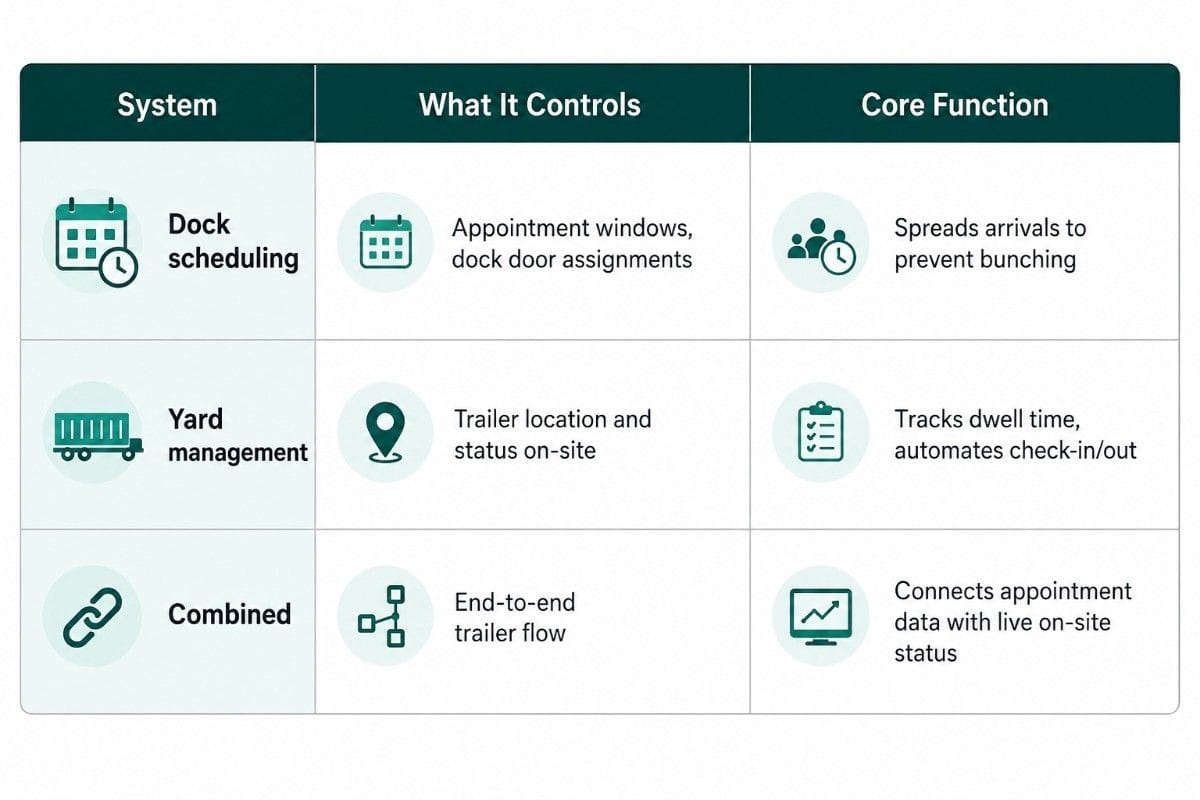
Dock scheduling and yard management aren't rivals. They handle different halves of the same problem, and they work best wired together. Scheduling assigns appointment windows and stops arrivals from bunching up; yard management tracks trailers once they land, feeding real status back so the schedule can adjust to reality.
Drivers can face detention at many stops, and better scheduling can help reduce these delays by spacing out arrivals and preventing the crowding that leads to long waits.
Dock Scheduling vs Yard Management at a Glance
The Cost of Poor Trailer Visibility
Poor visibility costs more than the detention line item suggests: wasted labor hours, missed opportunities, and leased trailers sitting idle because nobody knew they were available. That last one is easy to overlook, but it adds up fast when trailers just sit around unused for days.
Facilities using yard management systems can improve check-in and check-out efficiency, reduce truck waiting times, and minimize detention-related costs by improving visibility and coordination across the yard.
The exposure often starts before a trailer even reaches the gate. Without advance visibility into a shipment's real ETA, the dock team can't prepare a slot in time, and the clock starts the moment the trailer arrives, no matter how efficient the yard itself is.
This is where an end-to-end Freight Operating System (FOS) like RoaDo becomes relevant on the inbound leg, specifically not as a yard management system but as the shipment visibility layer feeding accurate arrival data upstream so dock teams aren't reacting blind to a trailer that just shows up.
Building Dock and Yard Visibility Into Your Freight Operations
Start by connecting inbound shipment visibility to dock scheduling, rather than treating scheduling as an isolated calendar. Real-time carrier communication, automated check-in, and integrated trailer tracking cut the driver wait times that turn into detention costs, while also speeding up downstream work like invoicing and carrier scorecards.
For manufacturers managing inbound freight across a fragmented mix of transporters, RoaDo's AI-based exception alerts, which have helped its customers avoid over 1 lakh delays across the shipments it tracks, give dock teams the advance warning needed to prepare a slot before a trailer shows up instead of finding out about a delay once the truck is already at the gate.
Platforms like this support the inbound visibility layer through hardware-free tracking (SIM and browser-based), allowing dock teams to see real-time arrival data even for third-party fleets without integrated GPS hardware, even working upstream of the yard itself. None of this requires ripping out an existing dock scheduling tool; the value comes from feeding it better, earlier data, not replacing it.
Frequently Asked Questions
1. What is the difference between dock management and yard management?
Dock management handles appointment scheduling and dock door assignments, while yard management tracks trailer location and status once vehicles arrive on-site.
2. What is dock scheduling software?
Dock scheduling software manages appointment booking and dock door assignments to prevent trailer bunching and long wait times.
3. How does yard management reduce detention fees?
It provides real-time trailer visibility and automates check-in and check-out, cutting detention fees by an estimated 20-40%.
4. What is trailer dwell time?
Trailer dwell time is the total duration a trailer spends in a facility's yard, from arrival to departure.
5. Do small warehouses need yard management software?
Yes, any facility with regular truck traffic benefits from basic dock scheduling and visibility, even without a full enterprise system.
6. How does dock scheduling prevent trailer bunching?
It spreads carrier arrivals across available appointment slots, removing the crowding that causes long gate waits.
7. Can real-time visibility reduce detention costs before a trailer arrives?
Yes, advance shipment visibility lets dock teams prepare a slot ahead of arrival, cutting the wait that begins the moment a trailer shows up unannounced.
8. What metrics should be tracked to measure dock and yard performance?
Average trailer dwell time, detention frequency, dock utilization rate, and appointment adherence are the core ones to watch.
Conclusion
Dock and yard inefficiency is a costly blind spot most operations underinvest in, even as detention charges and wasted labor hours quietly add up in the background. Dock scheduling and yard management solve related but different problems; one manages timing, and the other tracks what's physically on-site, and the real gains come from connecting the two instead of running them as separate tools.
Much of the detention exposure discussed here actually starts before a trailer reaches the yard, in the gap between when a shipment is genuinely en route and when the dock team finds out. As inbound visibility stretches further upstream, from carrier data into dock scheduling systems, facilities are moving from reacting to trailers at the gate to preparing for them ahead of time.
That shift doesn't happen overnight, but it starts with the same basic step: getting everyone working from the same, current picture of where freight actually is. As a modular freight operating system, RoaDo supports that upstream visibility, helping facilities achieve documented results like 65% faster billing cycles while turning a reactive yard into a predictable one.
“Better dock performance starts with better visibility. With RoaDo, businesses can track inbound shipments in real time, manage exceptions, and reduce costly delays and detention.”